

- Microsoft Fabric as the foundation for analytics and AI
- What Copilot can already do in Microsoft Fabric
- Where Copilot hits its limitations
- Fabric Data Agents as virtual data analysts
- Dashboards remain relevant
- Security and Governance are key to success
- Getting started the right way
- Conclusion: The next level of business intelligence is dialogue-oriented
- How COSMO CONSULT can support you
- Additional information

Today, dashboards are an integral part of modern business management. They highlight key metrics, reveal trends, and provide transparency across departments, processes, and locations. At the same time, many companies face a common challenge: the very question that becomes relevant during a meeting, client appointment, or operational process is not covered by the existing dashboard.
This is often when the traditional process kicks in. The business unit formulates a new requirement, the BI team reviews the data model and data source, builds an additional report, and publishes the update. This approach is proven, but it isn’t always fast enough. That’s because decisions often arise in situations where a reliable view of the data is needed immediately.
Microsoft Fabric, Copilot, and Fabric Data Agents are therefore creating a new way to access corporate data. Data analysis is becoming more dialogue-oriented. Users can ask questions in natural language and receive answers directly from existing data sources.
This shifts data analysis from predefined reports toward a flexible dialogue—and at the same time calls into question the traditional role of classic dashboards.
The key question, therefore, is: Will dashboards be replaced by agents? The answer is: Probably not. But dashboards will be usefully supplemented by AI-powered data assistants.
Microsoft Fabric as the foundation for analytics and AI
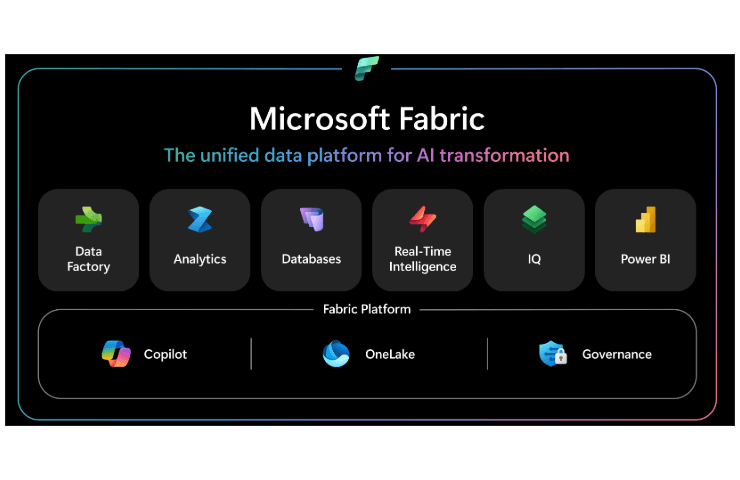
A solid data foundation is essential for reliable AI—especially when it comes to “Chat with your Data.” AI can only provide robust answers if data is available in a consistent, accessible, and traceable format. In the Microsoft data ecosystem, Microsoft Fabric lays the groundwork for this: As a central data platform, Fabric connects Data Factory, Data Engineering, Data Warehouse, Real-Time Intelligence, Data Science, and Power BI in an integrated environment. OneLake serves as a unified repository for enterprise data.
Microsoft Fabric brings together data and analytics tools and helps organizations make data available in a structured, understandable, and controlled manner for analytics and AI scenarios.
Microsoft Fabric is complemented by Microsoft Purview to address governance, data protection, compliance, and permissions. This is particularly crucial when using AI: The easier it is to query data, the more important it is to have clear rules for access, usage, and control.
Within Microsoft Fabric, there are two main ways to use AI for working with data: Copilot and Fabric Data Agents. But which tool is best suited for which use case? What can Copilot do—and when is a specialized Fabric Data Agent the better choice?
What Copilot can already do in Microsoft Fabric
Microsoft Copilot already supports users in many areas within Fabric. It can help explain data flows, formulate SQL queries, create code in notebooks, or understand Power BI reports more quickly. Copilot can also provide valuable support when analyzing existing data models and reports.
For business units, this means that many questions can be answered more quickly without requiring immediate technical expertise. For example, a user can ask for the key insights from a report, get an explanation of notable trends, or request a simple analysis of products, regions, or time periods.
In such scenarios, Copilot is a powerful productivity tool. It helps users tap into existing data more quickly and reduces the effort required for simple analyses. At the same time, Copilot often remains tied to the specific context in which it is being used—such as a particular report, a data model, or a single data source.

Where Copilot hits its limitations
In practice, it quickly becomes apparent that many business issues require more context. A term like “revenue” may sound unambiguous at first, but it can mean different things depending on the company. It could refer to billed revenue, order intake, net revenue, or a specifically defined metric from financial controlling. Without this business context, there is a risk that AI will provide an answer that is formally plausible but not appropriate from a business perspective.
Furthermore, many questions are not limited to a single data source. To understand variances, one often needs to analyze sales data, financial data, service data, or operational information together. This is precisely where a general Copilot approach reaches its limits if it is not sufficiently configured and narrowed down to the specific business context.
Another consideration is where users work. Not all employees work in Fabric or Power BI on a daily basis. Many decisions are made in Microsoft Teams, in Microsoft 365 Copilot, or within line-of-business processes. If data analysis is to be integrated into everyday work, it must be available where people are already working.
This is where Fabric Data Agents come into play.
Fabric Data Agents as virtual data analysts
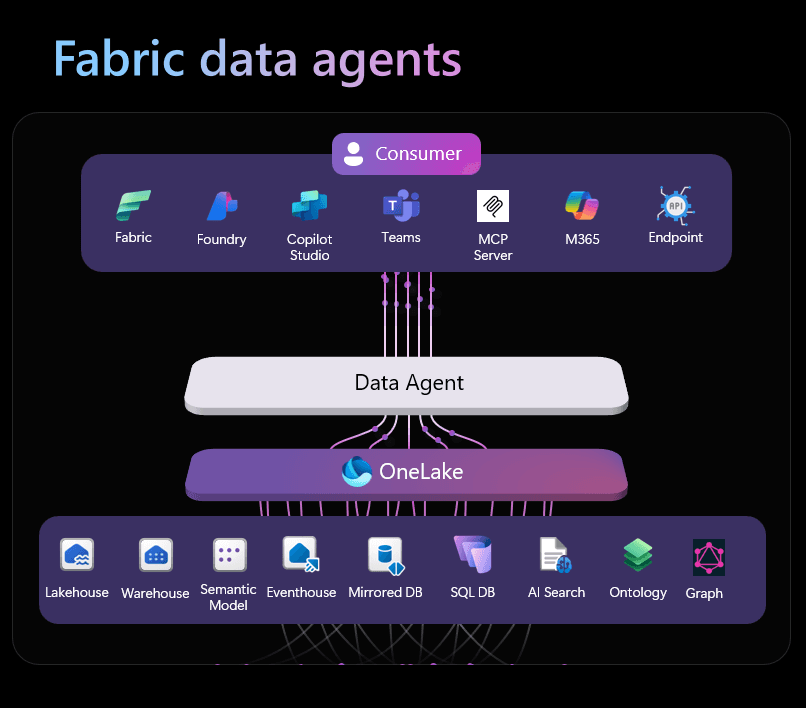
A Fabric Data Agent is a configurable, AI-powered data assistant. It accesses defined data sources in Microsoft Fabric and answers questions in natural language. Behind the scenes, the agent translates these questions into appropriate queries—such as SQL, DAX, or KQL—runs them against the authorized data sources, and presents the results in an easy-to-understand format.
The key difference from a general-purpose Copilot lies in its configuration. A Data Agent can be specifically equipped with domain-specific context. This includes relevant data sources, authorized tables and columns, KPI definitions, sample queries, business rules, and governance requirements.
This transforms a general AI assistant into a specialized virtual data analyst for a specific business unit. For example, a sales manager could ask in Microsoft Teams why a region is deviating from the plan. The Data Agent can select the appropriate data source, take the defined sales logic into account, and provide an answer based on the authorized data and permissions.
Dashboards remain relevant
Despite these new possibilities, dashboards remain important. They provide verified, standardized, and recurring key metrics. They continue to be indispensable for management reporting, operational control, and regular monitoring. A dashboard reliably answers questions such as: How is revenue trending? Which locations are under plan? What is the current capacity utilization? Which quality metrics are changing?
Data Agents complement this fixed view with flexible ad hoc analyses. They help when users want to ask a follow-up question: Why is a location deviating from the plan? Which product group is driving the change? Which customers should be examined more closely? Are there any anomalies in a specific region?
This does not create competition between the dashboard and the agent, but rather a new division of labor. Dashboards provide orientation. Data Agents enable a dialogue with the data.
Security and Governance are key to success
The easier it is to query corporate data using voice commands, the more important a reliable security and governance framework becomes. Microsoft Fabric is therefore closely integrated with Microsoft Purview. Permissions, roles, sensitivity labels, data loss prevention, auditing, and other governance mechanisms can help ensure controlled access to data.
It is important to note that a data agent must not provide more information than the respective user is authorized to see. Existing permissions and governance rules remain paramount. This is particularly relevant when processing sensitive data, personally identifiable information, or business-critical metrics.
Before deploying AI-powered data assistants, companies should therefore clarify which data may be used, who is granted access, which data requires special protection, and how AI responses will be verified. After all, secure AI starts with secure data.
Getting started the right way
A successful start with Fabric Data Agents begins not with the technology, but with a clear use case. It makes particular sense to start with a well-defined business unit, such as Sales, Service, Quality, Production, or Controlling. There, you should first verify whether the data foundation is robust and whether key performance indicators (KPIs) are clearly defined.
Next, determine which data sources may be used and what business context the agent requires. This includes definitions of terms, KPI definitions, and typical questions. It is equally important to consider governance and data protection from the very beginning. Only when data quality, business context, and permissions work together can a Data Agent reliably deliver added value.
Conclusion: The next level of business intelligence is dialogue-oriented
Microsoft Fabric, Copilot, and Data Agents are transforming the way companies work with data. This does not make dashboards obsolete. They remain a central component of business management. But they are being supplemented by new ways to use data more flexibly, more quickly, and more closely integrated into day-to-day work.
The real added value lies in the fact that business units no longer have to translate every new question into a new dashboard request. Instead, they can interact directly with their data—provided the data foundation is clean, the semantics are clear, and the governance is robust.
The future of business intelligence, therefore, does not lie in building fewer dashboards. It lies in enabling more dialogue with data.
How COSMO CONSULT can support you
COSMO CONSULT supports companies on their journey toward modern data and AI scenarios. In the AI Readiness Workshop, we analyze the current level of maturity and identify concrete next steps. In the AI Governance Workshop, we examine strategy, security, and compliance related to AI deployment. With the AI Solution Assessment, we develop tailored AI use cases and highlight the potential of existing data.
Additional information
In addition, we offer Microsoft Fabric webinars, in-depth sessions, and hands-on workshops to help you get started with Microsoft's central data platform in a practical and easy-to-understand way.

Contact our COSMOnaut
By Liliya RazovaLiliya provides strategic, dedicated support to her clients throughout their entire data and analytics journey, always keeping in mind what truly drives business forward. She helps them transition from manual reports to modern, scalable analytics solutions and firmly embed data-driven decision-making into their daily operations.
More similar blogposts:





Found what you were looking for?
Start your intelligent search now